
JASC Legacy Center

JASC Legacy Center

JASC Legacy Center
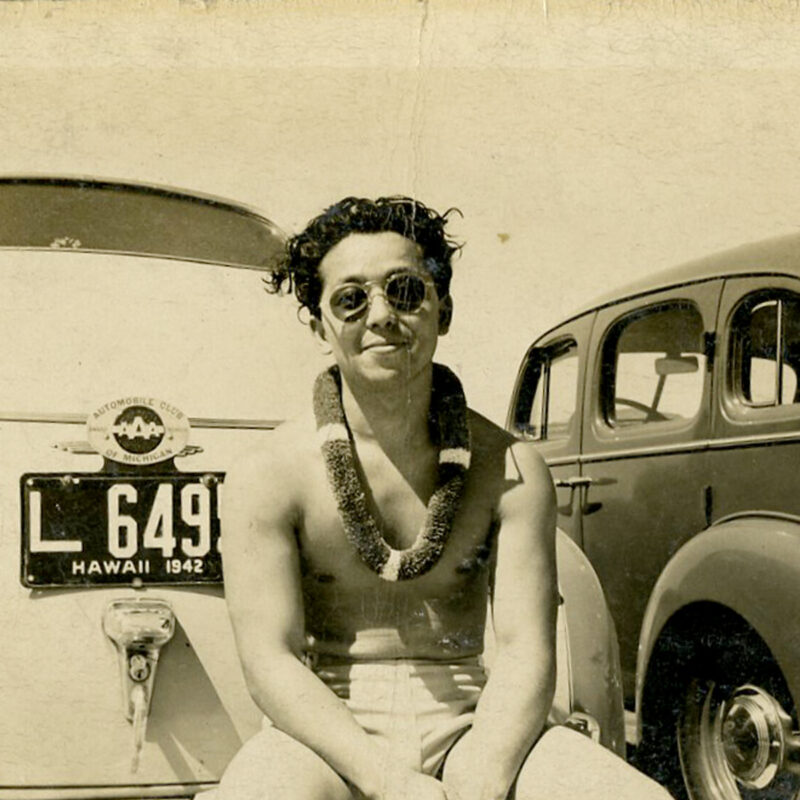
From the Jerry Jiro Katayama Photograph Collection, JASC Legacy Center.

From the Jerry Jiro Katayama Photograph Collection, JASC Legacy Center.

The JASC Legacy Center is Chicago’s home for the Japanese American story. Our archives, library, and oral history project preserve more than 75 years of community memory, including the experience of incarceration, postwar resettlement, and the everyday life of Japanese Americans in Chicago from the 1890s to today.

Explore the Archives

Schedule a Group Visit

Archives

Documents, photographs, audiovisual materials, and ephemera covering Japanese American life in Chicago from the late 1800s through today.

Browse the Archives

Library

Over 800 volumes on Japanese American immigration, WWII incarceration, military service, resettlement in Chicago, and arts and culture.

See the Library Catalog

Oral Histories

Community interviews on incarceration, family stories, contemporary activism, and life in Chicago’s Japanese American community.

Listen Now

For Corporations and DEI Programming

The Legacy Center partners with companies seeking authentic Asian American Heritage Month and DEI programming. Past programming includes: speaker sessions on Japanese American incarceration, guided archive tours, employee resource group workshops, and corporate sponsorship of preservation projects.

Contact us at legacy@jasc-chicago.org to discuss programming for your team.

Accessing the Collections

The Legacy Center is open to the public by appointment, free of charge. To preserve materials, we follow standard archival research protocols:

  • All researchers must complete a Legacy Center registration form and show current photo identification.
  • Most Legacy Center material is stored in closed stacks and will be retrieved for you by a staff member. Please allow time for this.
  • To preserve Legacy Center materials, food, drink, and smoking are not permitted in the research area.
  • Due to risk of inadvertent damage to the materials, researchers will use pencil only and may not use pens. Tracing of Legacy Center material is not permitted.
  • All researchers must store their personal belongings including book bags and coats outside the research area, with the exception of paper, pencil, notebooks, and a laptop computer or similar electronic device.
  • Upon exiting the research area, all items removed by researchers are subject to search to ensure that Legacy Center material is not inadvertently removed.
  • Reproduction of Legacy Center material is permitted in most cases. Please consult staff with specific reproduction requests.
  • Any reproductions provided by the Legacy Center are for personal/reference use only. If you wish to publish, exhibit, display, or further reproduce images of Legacy Center material, please contact staff for the current publication permissions request procedure. Researchers assume sole responsibility for any infringement of literary rights, copyright, or other rights pertaining to the materials they publish.
  • Theft, destruction, or mutilation of the Legacy Center’s materials is strictly forbidden and punishable by law.
  • Researchers agree to give the Legacy Center a complimentary copy of any publication relying substantially on its collections.

Donating to the Legacy Center

From the Mary and James Numata Photograph Collection, JASC Legacy Center.

From the Mary and James Numata Photograph Collection, JASC Legacy Center.

We accept materials in English or Japanese. Donating preserves your family’s story alongside thousands of others.

 These items include:

  • letters
  • memoirs and reminiscences
  • diaries, journals, and notebooks
  • scrapbooks
  • yearbooks
  • oral histories
  • family documents
  • legal documents such as birth, immigration, marriage, and death records
  • professional papers, speeches, and lectures
  • business records and reports
  • subject files
  • directories from the community, churches, temples, or groups
  • photographs, negatives, photo albums, and slides
  • videos, films, and audio tapes
  • newspapers, including clippings
  • books
  • magazines, journals, periodicals, and newsletters
  • dissertations, articles, and school papers
  • brochures, flyers, notices, and advertisements
  • organizational records

Because the research value of records may be diminished if items are damaged, rearranged, or incomplete, please contact the Legacy Center before sorting, discarding, or reorganizing your papers and records. When in doubt, don’t throw it out!

Please contact the Legacy Center via email, or call 773-275-0097 ext. 222. before bringing or sending any materials.  No donations can be accepted without prior approval of Legacy Center staff.

Frequently Asked Questions

Yes! Researchers, students, family historians, and community members are welcome by appointment, free of charge. Email legacy@jasc-chicago.org or call 773-275-0097 ext. 225 to schedule.

Our holdings document the Japanese American experience in Chicago from the late 1800s to today, with particular depth in WWII incarceration and postwar Chicago resettlement. We also hold JASC’s own institutional records from 1946 to the present.

Yes, and the community depends on these donations. Please email or call before bringing materials so staff can review what’s appropriate for the archive. Do not sort, rearrange, or discard items before contacting us.

Yes. We host school groups, university classes, and corporate ERG and DEI programs. We can offer archive tours, speaker sessions on Japanese American history, and project-based partnerships. Email legacy@jasc-chicago.org to discuss.

A growing portion is. Our digital exhibits, oral history audio, and finding aids are accessible via the Legacy Center website. Materials not yet digitized are available on-site by appointment.